


Home » Vietnam Travel News
Vietnam recognizes nine sea and island records
01:48 | |
| Halong Bay |
The recognition was an effort to promote the natural features and products of the nation's seas and islands to local and international visitors, the organization said in a statement.
Tra Co Beach in Quang Ninh Province is recognized as the longest beach, stretching 17 kilometers.
Ha Long Bay is listed as the one with the highest number of islets (1,169) in the country.
Truong Sa (Spratly) Islands, located 243 nautical miles from Khanh Hoa Province is recognized as the most remote island.
Tam Giang Cau Hai in Thua Thien Hue Province is the largest lagoon with 21,600 hectares.
Hai Phong City’s Cat Ba has the highest number of islands at 367, while Ca Mau Province’s Hon Khoai is the southernmost island.
Kien Giang Province’s Phu Quoc is the largest island with an area of 561 square kilometers; and Khanh Hoa Province’s Nam Yet is the biggest marine reserve with an area of 35,000 hectares.
Quang Ngai Province’s Ly Son is the most densely populated island with 1,888 people per square kilometer.
Source Thanh Nien News
Central coastal provinces attract Russian tourists
01:20 | |
| Central coastal provinces attract Russian tourists |
Previously, most Russian visitors travelled to Vietnam to avoid the winter in their homeland, but now many Russians visit the coastal tourist sites of Phan Thiet, Nha Trang and Da Nang even during the summer months.
According to travel companies, Da Nang International Airport receives an average of one charter flight bringing around 200 Russian visitors every day. Additionally, there are expected to be 12,000 Russian tourists travelling to Da Nang from the end of May to August this year.
Tourism experts say that Russian travellers are attracted to Vietnam’s wild and beautiful beaches.
In January this year, many Russian visitors were thankful for the efforts made by Vietnamese authorities to get stranded visitors back home after the Russian travel company Lanta Tour Voyage suddenly declared bankruptcy. Binh Thuan Province authorities and Vietnam National Administration of Tourism were extremely helpful to Russian tourists who were stranded in Vietnam.
The country receives about 18,000-19,000 Russian visitors each month, a year-on-year increase of 56 per cent in the first five months which recorded 86,681 travellers. Russian tourists have become a vital part of the Vietnamese tourism industry particularly in the coastal provinces.
By My Hanh – Translated by Kim Khanh-Source SGGP
Phu Yen Province to tap tourism potential
01:17 | |
| Bai Tram Beach, Phu Yen - Photo by Logan Bui |
Phu Yen Province has a deep historical past, and combined with its Viet and Cham cultures it could be promoted to attract a wide range of tourists, said Pham Van Bay, deputy director of the provincial department of Culture, Sports and Tourism.
The conference was held to strengthen tourism development cooperation with other highland and coastal provinces and create favourable conditions for travel companies to exchange and join hands in bringing visitors to Phu Yen.
By D. Trung – Translated by Kim Khanh
Vietnam has hidden potential for cruise ship tourism
01:15 |With a long coastline of over 3,200km, Vietnam has a huge advantage for developing cruise tourism and becoming one of the main destinations for such tourism in the South East Asian Region.
However, the country has so far not been able to develop the coastline for international tourisms due to poor investments and undeveloped infrastructure services.
According to Saigon Tourist Company, the country's leading travel agency, conferences and exhibition on cruise ship tourism have drawn enthusiasm from many cruise ship companies who have highly appreciated Vietnam’s cruise ship tourism potential because of its beautiful landscapes, friendly people, diversified biodiversity and cultures, and international ports along the sea from the North to the South.
Many cruise ships from the US, Europe and Asia have recently brought passengers to Vietnam, said Doan Thi Thanh Tra, marketing manager of Saigon Tourist.
Cruise ship tourism is one of the most successful and effective businesses of the company. The enterprise received 17,000 passengers on 35 cruise ships in 2006; 58,000 on 62 trips in 2007; 120,000 on 90 ships in 2008; and 115,000 visitors in 2011.
Saigon Tourist has welcomed more than 140,000 passengers in the first four months of this year.
Rich cruise passengers are willing to spend money for the length of their stay from 24-48 hours. However, Vietnam is now just a Port of Call for foreign cruise ships, but not considered as a Port of Embarkation or Port of Turn-around.
Meanwhile Singapore, Hong Kong (China) and Shanghai that own the world's busiest airports with large number of flights have become Ports of Embarkation and Ports of Turn-around and developed a strong cruise ship tourism.
Vietnam has not yet developed a tourism pier to receive big cruise liners that presently have to dock at trading ports.
Cruise passengers can also have unexpected demands. Hence, unattractive destinations, poor infrastructure and services have made Vietnam poor competition for other countries in the region.
By My Hanh – Translated by Kim Khanh
However, the country has so far not been able to develop the coastline for international tourisms due to poor investments and undeveloped infrastructure services.
According to Saigon Tourist Company, the country's leading travel agency, conferences and exhibition on cruise ship tourism have drawn enthusiasm from many cruise ship companies who have highly appreciated Vietnam’s cruise ship tourism potential because of its beautiful landscapes, friendly people, diversified biodiversity and cultures, and international ports along the sea from the North to the South.
Many cruise ships from the US, Europe and Asia have recently brought passengers to Vietnam, said Doan Thi Thanh Tra, marketing manager of Saigon Tourist.
Cruise ship tourism is one of the most successful and effective businesses of the company. The enterprise received 17,000 passengers on 35 cruise ships in 2006; 58,000 on 62 trips in 2007; 120,000 on 90 ships in 2008; and 115,000 visitors in 2011.
Saigon Tourist has welcomed more than 140,000 passengers in the first four months of this year.
Rich cruise passengers are willing to spend money for the length of their stay from 24-48 hours. However, Vietnam is now just a Port of Call for foreign cruise ships, but not considered as a Port of Embarkation or Port of Turn-around.
Meanwhile Singapore, Hong Kong (China) and Shanghai that own the world's busiest airports with large number of flights have become Ports of Embarkation and Ports of Turn-around and developed a strong cruise ship tourism.
Vietnam has not yet developed a tourism pier to receive big cruise liners that presently have to dock at trading ports.
Cruise passengers can also have unexpected demands. Hence, unattractive destinations, poor infrastructure and services have made Vietnam poor competition for other countries in the region.
By My Hanh – Translated by Kim Khanh
Source SGGP
VietJetAir launches auto check-in systems
01:12 |VietJet Aviation Joint Stock Company (VietJetAir) is the first airline in Vietnam to offer auto check-in services to its passengers.
This updated system enables passengers to go through the necessary check-in procedures in just one minute.
The airline will use the advanced technology at Tan Son Nhat, Noi Bai, and Da Nang international airports, as well as its ticket offices in Ho Chi Minh City and Hanoi. VietJetAir staff will be available to instruct passengers how to use the system.
Source Vietjetair
This updated system enables passengers to go through the necessary check-in procedures in just one minute.
The airline will use the advanced technology at Tan Son Nhat, Noi Bai, and Da Nang international airports, as well as its ticket offices in Ho Chi Minh City and Hanoi. VietJetAir staff will be available to instruct passengers how to use the system.
Source Vietjetair
SilkAir opens Hanoi-Singapore direct flight route
01:11 |The Singaporean airline SilkAir launched its new direct flight route Hanoi-Singapore at Noi Bai International Airport on June 5.
The company will operate three flights to Hanoi a week, on Tuesday, Thursday and Sunday.
The flights will depart from Singapore’s Changi Airport at 3.15pm and land at Noi Bai Airport at 5.35pm. The flight from Hanoi will take off at 6.30pm and arrive in Singapore at 10.50pm (local time).
This is the airline’s second direct flight to Vietnam after its Singapore-Danang flight.
Marvin Tan, Chief Executive of Silk Air, said the network of Singapore Airlines-Silk Air is expected to serve guests flying to 96 cities in 37 countries and territories.
Source VOV
The company will operate three flights to Hanoi a week, on Tuesday, Thursday and Sunday.
The flights will depart from Singapore’s Changi Airport at 3.15pm and land at Noi Bai Airport at 5.35pm. The flight from Hanoi will take off at 6.30pm and arrive in Singapore at 10.50pm (local time).
This is the airline’s second direct flight to Vietnam after its Singapore-Danang flight.
Marvin Tan, Chief Executive of Silk Air, said the network of Singapore Airlines-Silk Air is expected to serve guests flying to 96 cities in 37 countries and territories.
Source VOV
HCM City-Dubai direct air route opened
01:10 |Emirates Airlines has announced the launch of daily direct flights between Ho Chi Minh City and Dubai as from June 4.
By carrying around 240 tonnes of cargo per week, it will help to boost trade cooperation between the two cities with more than 120 destinations in the world.
HCM City is the 14th link of Emirates SkyCargo in the Far East to major exporters, including China, Japan, the Republic of Korea, and other countries in Europe, Middle East, Africa and Northern America.
Source VOV
By carrying around 240 tonnes of cargo per week, it will help to boost trade cooperation between the two cities with more than 120 destinations in the world.
HCM City is the 14th link of Emirates SkyCargo in the Far East to major exporters, including China, Japan, the Republic of Korea, and other countries in Europe, Middle East, Africa and Northern America.
Source VOV
Germany helps Hue City preserve ancient relics
01:09 |
This is the fourth project under the German international support programme for preserving Hue relics. The three previous projects were focused on preserving the Khai Tuong Lau – An Dinh Palace, King Tu Duc’s tomb and Toi Linh Tu in the Hue royal place.
Ta Vu, built in the early 19th century and upgraded in 1899, was seriously damaged during the wars.
The Ta Vu project will be carried by the German Conservation Restoration and Education Project (GCREP) and Society for the Preservation of Cultural Heritage (GEKE) in 2012 and 2013.
After completion, Ta Vu will be a place to showcase part of the Nguyen Dynasty’s history and an attractive destination for visitors to Hue.
Source VOV
Hue relic conservation work reviewed
01:08 | |
| Hue relic conservation work reviewed - Photo by An Bui |
A ceremony marking 30 years in operation of the Hue Relic Conservation Centre (1982-2012) was held on June 9 in the central Thua Thien-Hue province.
Speaking at the ceremony, UNESCO’s representative in Vietnam Katherine Muller-Marin applauded the achievements that the centre has gained in preserving the relic system of the ancient capital of Hue which was once seriously damaged by wars and natural disasters.
She praised the centre for developing local human resources for preservation work.
Katherine Muller-Marin also called on domestic and foreign organisations to continue supporting the centre in the cause of protecting the world cultural heritage site.
Phan Thanh Hai, Director of the Hue Relic Conservation Centre said the centre has cooperated with many international organisations in all over the world including the UNESCO and various agencies from Japan, Canada, France, England, the US, Germany, Thailand, Belgium, the RoK and Holland in restoring, preserving the site as well as training personnel for the centre.
The Hue Relic System was recognised by the UNESCO as a world cultural heritage site in 1993. The “Nha nhac cung dinh Hue” (Hue Royal Court Music) was also recognised as intangible cultural heritage of human kind in 2003.
Along with the preservation of the relics, traditional arts and handicrafts have been revived, assisting the tourism sector and making it a key economic sector of the province.
Total earnings from Hue’s tourism and services between 1996 and 2011 reached VND724.5 billion, a major part of which was re-invested in the restoration and preservation work.
VNA/VOVOnline
How much is enough for tourism promotion campain?
00:38 |The Vietnam National Administration of Tourism VNAT has spent a lot of money on tourism promotion campaigns. However, the costly programs prove to be unprofessional and ineffective.
Fastening belt in economic downturn
VNAT has suggested a mechanism on budgeting tourism promotion campaigns, under which one dollar earned from every traveler to Vietnam would be re-invested to advertise and promote Vietnam’s tourism in Vietnam and in foreign countries.
With the mechanism, the more foreign tourists to Vietnam, the higher budget for tourism promotion campaigns would be allocated. In 2011, for example, Vietnam received 6 million travelers, which means that Vietnam should reserve 6 million dollars (120 billion dong).
However, in reality, the budget for tourism promotion activities has been cut year after year. Nguyen Manh Cuong, VNAT’s Deputy General Director, said Thailand and Malaysia spend 80-100 million dollars a year to promote their tourism. Meanwhile, Vietnam would have only 2 million dollars this year for the activities.
In principle, the budget of 2 million dollars would be allocated to different agencies. It is estimated that 70 percent of the sum would be put under the management of VNAT, while 20 percent would go to the International Cooperation Agency, and the remaining to some small projects. The dispersing of the resources is believed to be not a good choice, because this would lead to the overlapping and low efficiency.
The limited budget is really a big barrier that hinders the advertisement and promotion activities. Though VNAT attends foreign trade fairs to promote Vietnam’s tourism, it lacks money to organize supporting events, such as press conferences, reception or visual promotion activities.
The representative of Sao Viet travel firm said that the lack of money makes the Vietnamese booth at trade fairs dim and unattractive. Meanwhile, some big travel firms and the national flag air carrier Vietnam Airlines, which are believed financially powerful, all have their own stalls and they refuse to display their products and services at the national tourism booth.
Cut your coat according to your cloth
Pham Trung Luong, Deputy Head of the Tourism Research and Development Institute, said it’s clear that the budget cuts would badly affect tourism promotion activities. However, as the budget cut proves to be unavoidable for now, it would be better to discuss about how to use the modest sum of money to promote tourism.
Luong said that while Vietnam lacks money, it still wastes money on the things which cannot bring effects. Travel firms have many times complained about the unprofessional way of the watchdog agencies in organizing the outbound trips to attend foreign trade fairs.
Vietnam once brought a lot of leaflets to a foreign trade fair to promote tourism. However, the leaflets were then left at the Vietnamese embassies in the countries.
There could be two reasons behind this. First, Vietnam brought to the trade fair the products which were not interested by travelers. And second, Vietnam did not choose the right way of doing marketing: while people try to search for tourism information on Internet, Vietnam only bring printed leaflets and brochures.
“One should not blame everything on the lack of money,” Luong said.
He believes that Vietnam needs to learn thoroughly about a market before it plans to penetrate the market. Opening representative offices in the foreign markets proves to be the best way to learn about the new markets. Besides, the offices can also act as the bridge that connects Vietnam’s tourism with local travelers.
However, to date, Vietnam still has not offices in foreign countries, including in Japan, which is considered the most potential market for Vietnam.
Fastening belt in economic downturn
VNAT has suggested a mechanism on budgeting tourism promotion campaigns, under which one dollar earned from every traveler to Vietnam would be re-invested to advertise and promote Vietnam’s tourism in Vietnam and in foreign countries.
With the mechanism, the more foreign tourists to Vietnam, the higher budget for tourism promotion campaigns would be allocated. In 2011, for example, Vietnam received 6 million travelers, which means that Vietnam should reserve 6 million dollars (120 billion dong).
However, in reality, the budget for tourism promotion activities has been cut year after year. Nguyen Manh Cuong, VNAT’s Deputy General Director, said Thailand and Malaysia spend 80-100 million dollars a year to promote their tourism. Meanwhile, Vietnam would have only 2 million dollars this year for the activities.
In principle, the budget of 2 million dollars would be allocated to different agencies. It is estimated that 70 percent of the sum would be put under the management of VNAT, while 20 percent would go to the International Cooperation Agency, and the remaining to some small projects. The dispersing of the resources is believed to be not a good choice, because this would lead to the overlapping and low efficiency.
The limited budget is really a big barrier that hinders the advertisement and promotion activities. Though VNAT attends foreign trade fairs to promote Vietnam’s tourism, it lacks money to organize supporting events, such as press conferences, reception or visual promotion activities.
The representative of Sao Viet travel firm said that the lack of money makes the Vietnamese booth at trade fairs dim and unattractive. Meanwhile, some big travel firms and the national flag air carrier Vietnam Airlines, which are believed financially powerful, all have their own stalls and they refuse to display their products and services at the national tourism booth.
Cut your coat according to your cloth
Pham Trung Luong, Deputy Head of the Tourism Research and Development Institute, said it’s clear that the budget cuts would badly affect tourism promotion activities. However, as the budget cut proves to be unavoidable for now, it would be better to discuss about how to use the modest sum of money to promote tourism.
Luong said that while Vietnam lacks money, it still wastes money on the things which cannot bring effects. Travel firms have many times complained about the unprofessional way of the watchdog agencies in organizing the outbound trips to attend foreign trade fairs.
Vietnam once brought a lot of leaflets to a foreign trade fair to promote tourism. However, the leaflets were then left at the Vietnamese embassies in the countries.
There could be two reasons behind this. First, Vietnam brought to the trade fair the products which were not interested by travelers. And second, Vietnam did not choose the right way of doing marketing: while people try to search for tourism information on Internet, Vietnam only bring printed leaflets and brochures.
“One should not blame everything on the lack of money,” Luong said.
He believes that Vietnam needs to learn thoroughly about a market before it plans to penetrate the market. Opening representative offices in the foreign markets proves to be the best way to learn about the new markets. Besides, the offices can also act as the bridge that connects Vietnam’s tourism with local travelers.
However, to date, Vietnam still has not offices in foreign countries, including in Japan, which is considered the most potential market for Vietnam.
Source Tin Tuc/ Vietnamnet
Vietnam still doesn’t know how to do to improve tourism staff
00:36 |The quality of tourism products mostly depends on the staff’s qualification. Meanwhile, the question of how to improve the staff to develop tourism still beats Vietnamese high ranking officials.
Deficient in quantity and bad in quality
Vietnam had fulfilled its plan of receiving six million of foreign travelers and 30 million of domestic travelers by the end of 2011. It hopes to receive 8 million foreign travelers and 35 domestic travelers by 2015. Meanwhile, the workforce in the tourism sector is forecasted to satisfy 75 percent only of the market’s demand.
Vietnam now has some 500,000 direct workers and nearly 1 million indirect workers in the tourism sector. This means that in order to serve 8 million foreign and 35 million domestic travelers by 2015; it would need 30,000 workers at different qualification levels. Meanwhile, it is expected that Vietnam would have 18,000 workers only.
A report by the Vietnam National Administration of Tourism shows that only 50 percent of workers have been trained in profession. A survey by SNV on the workers at big tourism centers like Sa Pa (Lao Cai province), Hanoi and Hue shows that the staff here does not have the English skill standards needed for their profession.
Nguyen Van Quynh, Managing Director of Viet Kitchen chain said that all the workers the chain is employing need to be re-trained, even though they have undergone training courses.
He complained that tourism vocational schools now focus on providing theoretical knowledge, while students do not have the chance for practicing. Almost all the graduates lack necessary skills, especially communication skills.
According to Ha Van Sieu, Head of the Tourism Research and Development Institute, while 3-4 star hotels have qualified staff, lower grade hotels for popular travelers are facing the staff crisis.
Due to the lack of qualified workers, tourism service providers have to accept untrained workers in the high season to serve the high demand. Especially, new tourism sites recruit the workers who previously worked in the agricultural production, which has led to the bad quality of services.
“Quality”, not “quantity” targeted
In drawing up a plan to develop the tourism industry in the next 10 years, relevant ministries have emphasized that quality, not quantity, would be the most important target for the tourism industry development. This means that Vietnam targets the markets which have high spending and strives to persuade travelers stay for longer time in Vietnam.
In order to do that, Vietnam needs to offer suitable tourism products that fit high income earners. Of course, the products need to have high quality, and they are decided by the qualification of the staff in the tourism sector.
Pham Trung Luong, Deputy Head of the Tourism Research and Development Institute, admitted that the question about if Vietnam can have qualified workforce for the tourism sector by 2020 remains answered.
Nguyen Manh Cuong, Deputy General Director of the Vietnam National Administration of Tourism (VNAT), said tourism complexes do not want to spend money on training, while they just try to lure trained officers from other firms. The lack of qualified staff has led to the stiff competition among tourism sites, especially the ones in the central region, such as Phan Thiet – Mui Ne, Nha Trang and Tuy Hoa.
Dao emphasized that in order to prepare the labor force for the tourism industry, involved parties need to join forces to organize training courses to the orders of enterprises.
Deficient in quantity and bad in quality
Vietnam had fulfilled its plan of receiving six million of foreign travelers and 30 million of domestic travelers by the end of 2011. It hopes to receive 8 million foreign travelers and 35 domestic travelers by 2015. Meanwhile, the workforce in the tourism sector is forecasted to satisfy 75 percent only of the market’s demand.
Vietnam now has some 500,000 direct workers and nearly 1 million indirect workers in the tourism sector. This means that in order to serve 8 million foreign and 35 million domestic travelers by 2015; it would need 30,000 workers at different qualification levels. Meanwhile, it is expected that Vietnam would have 18,000 workers only.
A report by the Vietnam National Administration of Tourism shows that only 50 percent of workers have been trained in profession. A survey by SNV on the workers at big tourism centers like Sa Pa (Lao Cai province), Hanoi and Hue shows that the staff here does not have the English skill standards needed for their profession.
Nguyen Van Quynh, Managing Director of Viet Kitchen chain said that all the workers the chain is employing need to be re-trained, even though they have undergone training courses.
He complained that tourism vocational schools now focus on providing theoretical knowledge, while students do not have the chance for practicing. Almost all the graduates lack necessary skills, especially communication skills.
According to Ha Van Sieu, Head of the Tourism Research and Development Institute, while 3-4 star hotels have qualified staff, lower grade hotels for popular travelers are facing the staff crisis.
Due to the lack of qualified workers, tourism service providers have to accept untrained workers in the high season to serve the high demand. Especially, new tourism sites recruit the workers who previously worked in the agricultural production, which has led to the bad quality of services.
“Quality”, not “quantity” targeted
In drawing up a plan to develop the tourism industry in the next 10 years, relevant ministries have emphasized that quality, not quantity, would be the most important target for the tourism industry development. This means that Vietnam targets the markets which have high spending and strives to persuade travelers stay for longer time in Vietnam.
In order to do that, Vietnam needs to offer suitable tourism products that fit high income earners. Of course, the products need to have high quality, and they are decided by the qualification of the staff in the tourism sector.
Pham Trung Luong, Deputy Head of the Tourism Research and Development Institute, admitted that the question about if Vietnam can have qualified workforce for the tourism sector by 2020 remains answered.
Nguyen Manh Cuong, Deputy General Director of the Vietnam National Administration of Tourism (VNAT), said tourism complexes do not want to spend money on training, while they just try to lure trained officers from other firms. The lack of qualified staff has led to the stiff competition among tourism sites, especially the ones in the central region, such as Phan Thiet – Mui Ne, Nha Trang and Tuy Hoa.
Dao emphasized that in order to prepare the labor force for the tourism industry, involved parties need to join forces to organize training courses to the orders of enterprises.
Source Tin Tuc / Vietnamnet
Infrastructure system too weak to develop tourism
00:35 |When designing new tours, travel firms always have to survey the infrastructure system in order to draw up reasonable products. However, the infrastructure system in Vietnam remains too poor for tourism development.
Poor infrastructure may spoil tours
“We have to examine the stretches of roads, the stops and the capability of providing services so as to inform to partners and clients. After that, we have to survey the tourism infrastructure items such as accommodations, services at the destination points,” said Lai Van Quan, Head of the Tour Operator Division of Mai Linh Tourist Company.
“The stretch of road from Dien Bien to Lai Chau provinces on the northwest arc usually sees landslide in the rainy season. Therefore, we had to follow another itinerary, following the Highway 279, then to the Highway 32, crossing Than Uyen and then to Lai Chau province,” said Duong Xuan Trang, Branch Director of Mai Phuong Vy.
“However, with the new route, travelers would have to travel 100 kilometers more, while the quality of the road is low, thus making travelers feel tired. As a result, the travel firm later had to make some adjustments to ensure the travelers’ health,” he added.
An executive of Tan Hong travel firm, specializing in receiving cruise travelers, also complained that the poor infrastructure has made many travelers hesitant to choose Vietnam as the destination.
Foreign cruise travelers just want to stay for one day at the Ha Long Bay and then want to go to Hanoi. However, the road from Ha Long to Hanoi, though having been upgraded, still comprises of many strait parts. As a result, it takes travelers eight hours to go to Hanoi and return to Ha Long in total, while they only have four hours to visit Hanoi.
It’s clear that the localities which have airports and sea ports would more easily attract travelers. In the central region, for example, which attracts tourists with wonderful beaches, Nha Trang has always been the top choice because there is an international airport.
However, according to Nguyen Anh Tuan, Deputy Director of the Travel Department of the Vietnam National Administration of Tourism (VNAT), said it would be unreasonable to build airports in all localities. It would be better to form up good transport network and provide high quality transport services which connect key traffic points with different localities.
In fact, the new tourist sites with uncompleted infrastructure items are really attractive with their primitive beauties. However, with poor infrastructure, they can only fit trekking or adventure tourism.
State needs to make investment as “bait capital”
It always takes huge capital to build or upgrade roads to make it more convenient for tourists. Therefore, Tuan believes that the State should make investment first-- pouring the “bait capital” into the projects; then call on other investors and people to join hands to upgrade the tourism points.
In the period from 2006 to 2010, the State funneled 3460 billion dong to 59 provinces and cities to help them upgrade the tourism infrastructure system.
However, local authorities complained that the capital is just a “drop of water in the ocean,” because the allocated budget just can satisfy 20 percent of the capital demand.
According to the Ministry of Culture, Sports and Tourism, Vietnam would need 15 trillion dong to develop the tourist infrastructure in 2011-2015. Meanwhile, the state budget would be able to provide 8 trillion dong, while the remaining sum of money would be mobilized from other sources.
The principle of “bait capital” is believed to help much in upgrading the infrastructure system. Once the state injects money in the projects in some localities, the land value in the localities would increase, thus attracting many investors who would spend money to build tourist works there. The works then would serve as the magnet to lure travelers.
Source Tin Tuc / Vietnamnet
Poor infrastructure may spoil tours
“We have to examine the stretches of roads, the stops and the capability of providing services so as to inform to partners and clients. After that, we have to survey the tourism infrastructure items such as accommodations, services at the destination points,” said Lai Van Quan, Head of the Tour Operator Division of Mai Linh Tourist Company.
“The stretch of road from Dien Bien to Lai Chau provinces on the northwest arc usually sees landslide in the rainy season. Therefore, we had to follow another itinerary, following the Highway 279, then to the Highway 32, crossing Than Uyen and then to Lai Chau province,” said Duong Xuan Trang, Branch Director of Mai Phuong Vy.
“However, with the new route, travelers would have to travel 100 kilometers more, while the quality of the road is low, thus making travelers feel tired. As a result, the travel firm later had to make some adjustments to ensure the travelers’ health,” he added.
An executive of Tan Hong travel firm, specializing in receiving cruise travelers, also complained that the poor infrastructure has made many travelers hesitant to choose Vietnam as the destination.
Foreign cruise travelers just want to stay for one day at the Ha Long Bay and then want to go to Hanoi. However, the road from Ha Long to Hanoi, though having been upgraded, still comprises of many strait parts. As a result, it takes travelers eight hours to go to Hanoi and return to Ha Long in total, while they only have four hours to visit Hanoi.
It’s clear that the localities which have airports and sea ports would more easily attract travelers. In the central region, for example, which attracts tourists with wonderful beaches, Nha Trang has always been the top choice because there is an international airport.
However, according to Nguyen Anh Tuan, Deputy Director of the Travel Department of the Vietnam National Administration of Tourism (VNAT), said it would be unreasonable to build airports in all localities. It would be better to form up good transport network and provide high quality transport services which connect key traffic points with different localities.
In fact, the new tourist sites with uncompleted infrastructure items are really attractive with their primitive beauties. However, with poor infrastructure, they can only fit trekking or adventure tourism.
State needs to make investment as “bait capital”
It always takes huge capital to build or upgrade roads to make it more convenient for tourists. Therefore, Tuan believes that the State should make investment first-- pouring the “bait capital” into the projects; then call on other investors and people to join hands to upgrade the tourism points.
In the period from 2006 to 2010, the State funneled 3460 billion dong to 59 provinces and cities to help them upgrade the tourism infrastructure system.
However, local authorities complained that the capital is just a “drop of water in the ocean,” because the allocated budget just can satisfy 20 percent of the capital demand.
According to the Ministry of Culture, Sports and Tourism, Vietnam would need 15 trillion dong to develop the tourist infrastructure in 2011-2015. Meanwhile, the state budget would be able to provide 8 trillion dong, while the remaining sum of money would be mobilized from other sources.
The principle of “bait capital” is believed to help much in upgrading the infrastructure system. Once the state injects money in the projects in some localities, the land value in the localities would increase, thus attracting many investors who would spend money to build tourist works there. The works then would serve as the magnet to lure travelers.
Source Tin Tuc / Vietnamnet
Streets pedestrianised around HCM Mausoleum
00:29 |Drafted by the Transportation Department and the Management Board of the mausoleum, the proposal aims to turn Chua Mot Cot, Ong Ich Khiem and the south side of Hung Vuong streets surrounding Ba Dinh Square and the Ho Chi Minh Mausoleum into walking streets.
While the proposal aims to ban all vehicles from these streets, exceptions would be given to special cases for vehicles of organisations, offices and individuals who work and live within the area, and these vehicles have to move at a speed of no more than 15km per hour. All vehicles have to get permission from the Management Board of the mausoleum to have access to the pedestrian streets.
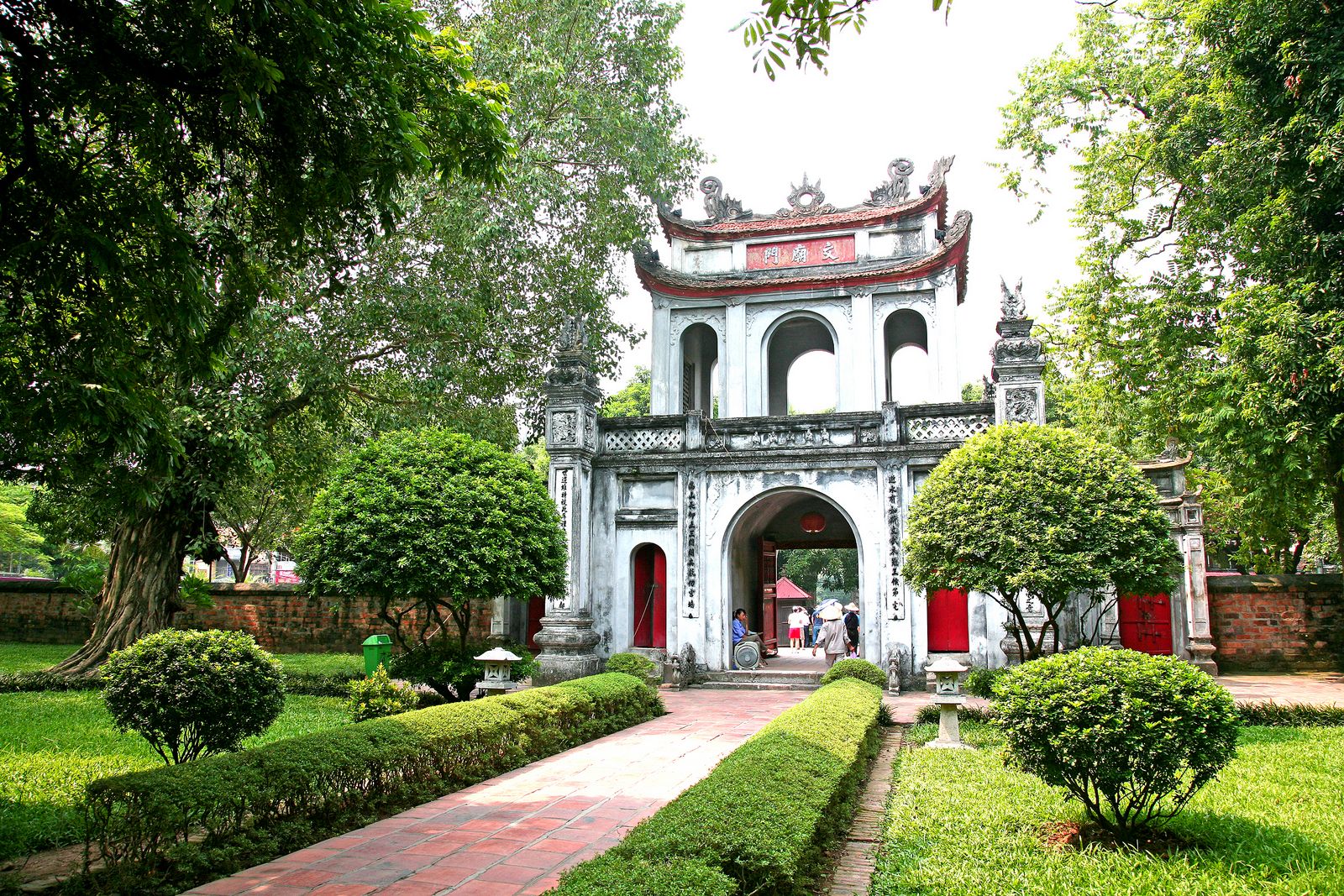
City authorities originally planned to designate 10 walking streets in the downtown area near the Old Quarter starting from November 1, but so far that plan has not been implemented.
Nguyen Van Cuong, head of the Management Board of the mausoleum, said the plan would not significantly affect businesses or offices in the area and would be more feasible than setting up walking streets in the Old Quarter, since the mausoleum is in an area with fewer commercial businesses.
Parking lots for cars would be set up at the grounds of the Ho Chi Minh Museum and the mausoleum management committee has also asked the city to allow additional parking in the parking area at the Imperial Thang Long Citadel site. Additional parking lots would also be set up in the area.
A designated spot for taxis to drop off passengers would also be set up on Ngoc Han Street to make visits to the area more convenient, especially for tourists.
Public toilets would be added in appropriate areas on Ba Huyen Thanh Quan Street. In the long term, the city would build underground public toilets in accordance with the plan to upgrade Ba Dinh Square.
SourceVietNamNet/Viet Nam News
Tourism promotion project begins
00:28 |The central provincial people's committee of Quang Nam, the UNESCO office in Ha Noi and the Korean National Commission for UNESCO aim to promote tourism among local communities and draw attention to the World Heritage Sites in the country's central provinces.
"It's a significant project as it helps raise awareness of the world heritage sites of Hoi An town, My Son sanctuary, a biophere reserve (Cham Island) and the complex of Hue Monuments," said vice chairman of the Quang Nam People's Committee Tran Minh Ca.
"The project will help introduce the charming landscapes and destinations of the central provinces to the world," he said.
The project, which is sponsored by South Korean Asiana Airlines, will communicate tourism information through international flights and direct air routes between Da Nang and Incheon in South Korea.
"We are honoured to join hands in preserving and promoting the UNESCO-recognised world heritage at Hoi An. We hope to boost tourism in the central provinces through our international flights," said Asiana Airlines president Yoon Young-doo.
He said the launching ceremony was a special event to mark the 20th anniversary of diplomatic relations between Viet Nam and South Korea.
The project would also provide for the installation of solar-powered public lighting systems in Hoi An.
Last December, Asiana Airlines debuted its direct route between Seoul and Da Nang, 25km south of Hoi An, and it has since increased from two to three flights weekly.
According to last year's statistics, Quang Nam Province hosted 505,435 tourists, 4,564 of which were from South Korea.
Source VietNamNet/Viet Nam News
"It's a significant project as it helps raise awareness of the world heritage sites of Hoi An town, My Son sanctuary, a biophere reserve (Cham Island) and the complex of Hue Monuments," said vice chairman of the Quang Nam People's Committee Tran Minh Ca.
"The project will help introduce the charming landscapes and destinations of the central provinces to the world," he said.
The project, which is sponsored by South Korean Asiana Airlines, will communicate tourism information through international flights and direct air routes between Da Nang and Incheon in South Korea.
"We are honoured to join hands in preserving and promoting the UNESCO-recognised world heritage at Hoi An. We hope to boost tourism in the central provinces through our international flights," said Asiana Airlines president Yoon Young-doo.
He said the launching ceremony was a special event to mark the 20th anniversary of diplomatic relations between Viet Nam and South Korea.
The project would also provide for the installation of solar-powered public lighting systems in Hoi An.
Last December, Asiana Airlines debuted its direct route between Seoul and Da Nang, 25km south of Hoi An, and it has since increased from two to three flights weekly.
According to last year's statistics, Quang Nam Province hosted 505,435 tourists, 4,564 of which were from South Korea.
Source VietNamNet/Viet Nam News
Businesses cut down expenses, hotels have fewer customers
00:27 |A lot of hotels in HCM City, including the bustling ones in the central area of the city, complain that they have few customers these days.
The revenues from room, meal, meeting services all have seen sharp decrease in comparison with the same period of the last year. Some hotels have reportedly slashed the hotel room rate by tens of dollars, while further decreases prove to be unavoidable.
A mini survey by Thoi bao Kinh te Saigon showed that in the first week of May 2012, the occupancy of many high grade hotels dropped sharply by tens of percent. A well-known hotel on Dong Khoi road in HCM City, which is considered the ideal area for hotel business, reported the low occupancy rate of 50-60 percent.
Meanwhile, the hotels located further from the central area of the city even have fewer clients. A five star hotel in district 5 in HCM City only had 36 percent of rooms booked in the first quarter of 2012.
It is now the low tourism season of the year. However, at that time of 2011, the hotel room occupancy was still higher than that of this year. Besides, hotels still could earn money from meal and meeting services. Meanwhile, the demand for all the services is very weak this year.
Nguyen Anh Vu, General Director of Majestic, a five star hotel, said that in April 2012, the hotel occupancy rate was 11 percent lower than that of the same period of the last year. In 2010-2011, the hotel rooms were full all year round, and it did not have “low season”. Meanwhile, things are worse this year: the number of foreign tourists to Vietnam has decreased, while domestic clients have cut down spending on meals and meetings.
“We have 178 rooms, but only 70-80 rooms were occupied on some days, even though we have been running a lot of sales promotion programs,” he said.
“Businesses and individuals now tend to spend less on meals and meetings,” he added.
An executive of a high grade hotel said 2-3 star hotels may make fatter profit than luxurious hotels these days, because clients tend to stay at medium class hotels instead of high grade hotels to save money.
However, the owners of the medium class hotels have denied the good business performance. Except some small hotels in Ben Thanh market area in district 1, other hotels in other areas now have few clients.
Do Dai Ba, Sales and Marketing Director of Lavender on Le Thanh Ton Street near the Ben Thanh Market, said his hotel’s occupancy rate is 70 percent, but it is still lower than the 80 percent of the same period of the last year.
Though the hotel room occupancy rate remains “satisfactory,” the director said that the conditions are not really optimistic.
Ba said that it’s difficult to compare the revenue of different hotels. Unlike big hotels in other areas, the hotels there mostly provide room and meal services and do not have meeting or outside party services.
Vien Dong 3-star hotel on Pham Ngu Lao Street has reported the low hotel room occupancy rate of 50 percent, which is lower than the 70 percent of the last year. The revenue from other services has also decreased.
In general, the hotel room occupancy rate in May is lower than that in other months. However, in 2012, the signs of decrease appeared right in the first months of the year.
“We have offered lower hotel room rates since mid April 2012, but we still do not have customers,” complained Nguyen Thi Xuan Hong, Vien Dong’s director.
Other hotels have also slashed their room rates. Majestic, for example, now quotes the room rate at 145 dollars a night instead of 170 dollars. Some high grade hotels on Dong Khoi road have slashed the room rates from 198 to 163 dollars.
Source: TBKTSG
The revenues from room, meal, meeting services all have seen sharp decrease in comparison with the same period of the last year. Some hotels have reportedly slashed the hotel room rate by tens of dollars, while further decreases prove to be unavoidable.
A mini survey by Thoi bao Kinh te Saigon showed that in the first week of May 2012, the occupancy of many high grade hotels dropped sharply by tens of percent. A well-known hotel on Dong Khoi road in HCM City, which is considered the ideal area for hotel business, reported the low occupancy rate of 50-60 percent.
Meanwhile, the hotels located further from the central area of the city even have fewer clients. A five star hotel in district 5 in HCM City only had 36 percent of rooms booked in the first quarter of 2012.
It is now the low tourism season of the year. However, at that time of 2011, the hotel room occupancy was still higher than that of this year. Besides, hotels still could earn money from meal and meeting services. Meanwhile, the demand for all the services is very weak this year.
Nguyen Anh Vu, General Director of Majestic, a five star hotel, said that in April 2012, the hotel occupancy rate was 11 percent lower than that of the same period of the last year. In 2010-2011, the hotel rooms were full all year round, and it did not have “low season”. Meanwhile, things are worse this year: the number of foreign tourists to Vietnam has decreased, while domestic clients have cut down spending on meals and meetings.
“We have 178 rooms, but only 70-80 rooms were occupied on some days, even though we have been running a lot of sales promotion programs,” he said.
“Businesses and individuals now tend to spend less on meals and meetings,” he added.
An executive of a high grade hotel said 2-3 star hotels may make fatter profit than luxurious hotels these days, because clients tend to stay at medium class hotels instead of high grade hotels to save money.
However, the owners of the medium class hotels have denied the good business performance. Except some small hotels in Ben Thanh market area in district 1, other hotels in other areas now have few clients.
Do Dai Ba, Sales and Marketing Director of Lavender on Le Thanh Ton Street near the Ben Thanh Market, said his hotel’s occupancy rate is 70 percent, but it is still lower than the 80 percent of the same period of the last year.
Though the hotel room occupancy rate remains “satisfactory,” the director said that the conditions are not really optimistic.
Ba said that it’s difficult to compare the revenue of different hotels. Unlike big hotels in other areas, the hotels there mostly provide room and meal services and do not have meeting or outside party services.
Vien Dong 3-star hotel on Pham Ngu Lao Street has reported the low hotel room occupancy rate of 50 percent, which is lower than the 70 percent of the last year. The revenue from other services has also decreased.
In general, the hotel room occupancy rate in May is lower than that in other months. However, in 2012, the signs of decrease appeared right in the first months of the year.
“We have offered lower hotel room rates since mid April 2012, but we still do not have customers,” complained Nguyen Thi Xuan Hong, Vien Dong’s director.
Other hotels have also slashed their room rates. Majestic, for example, now quotes the room rate at 145 dollars a night instead of 170 dollars. Some high grade hotels on Dong Khoi road have slashed the room rates from 198 to 163 dollars.
Source: TBKTSG
Vietnam lawmakers plan national tourist police
00:19 |During a Wednesday review of Vietnam's existing Tourism Laws, National Assembly members called for the creation of a police force dedicated to protecting visitors.
“Tourists should know who to contact in case they need help,” VnExpress quoted Vu The Binh, deputy chairman of Vietnam Tourism Association, as saying. “At the moment, a tourist who suffers a broken leg cannot communicate with all of the agencies that are responsible for helping him.”
Binh added that only four of the 88 articles in the Tourism Law that was passed in 2005 pertain to the rights and responsibilities of tourists.
He said local media have reported many stories about tourists being robbed only to received no assistance from the relevant agencies.
“Vietnam has yet to become a civilized and safe destination," he said. "Many foreign tourists aren't satisfied after leaving the country.”
Nguyen Quang Lan, chairman of the Hanoi Tourism Association called for the establishment of a national tourist police agency.
“It is necessary because Vietnam counts on tourism as a major industry,” he said.
Lan, the former director of the Hanoi Department of Culture, Sports and Tourism, said that government tourism agencies shouldn't be blamed for any security compliants because these agencies aren't responsible for protecting tourists against crime.
“The mobile police taskforce should be authorized to handle such cases,” he said.
During last week's session, the NA deputies agreed that Vietnam needed more foreign-language hotlines to receive information and complaints from tourists and proposed compulsory insurance for foreign visitors.
The amended tourism law will be revisited during the next NA session and submitted for approval in 2013.
Source Thanh Nien News


